
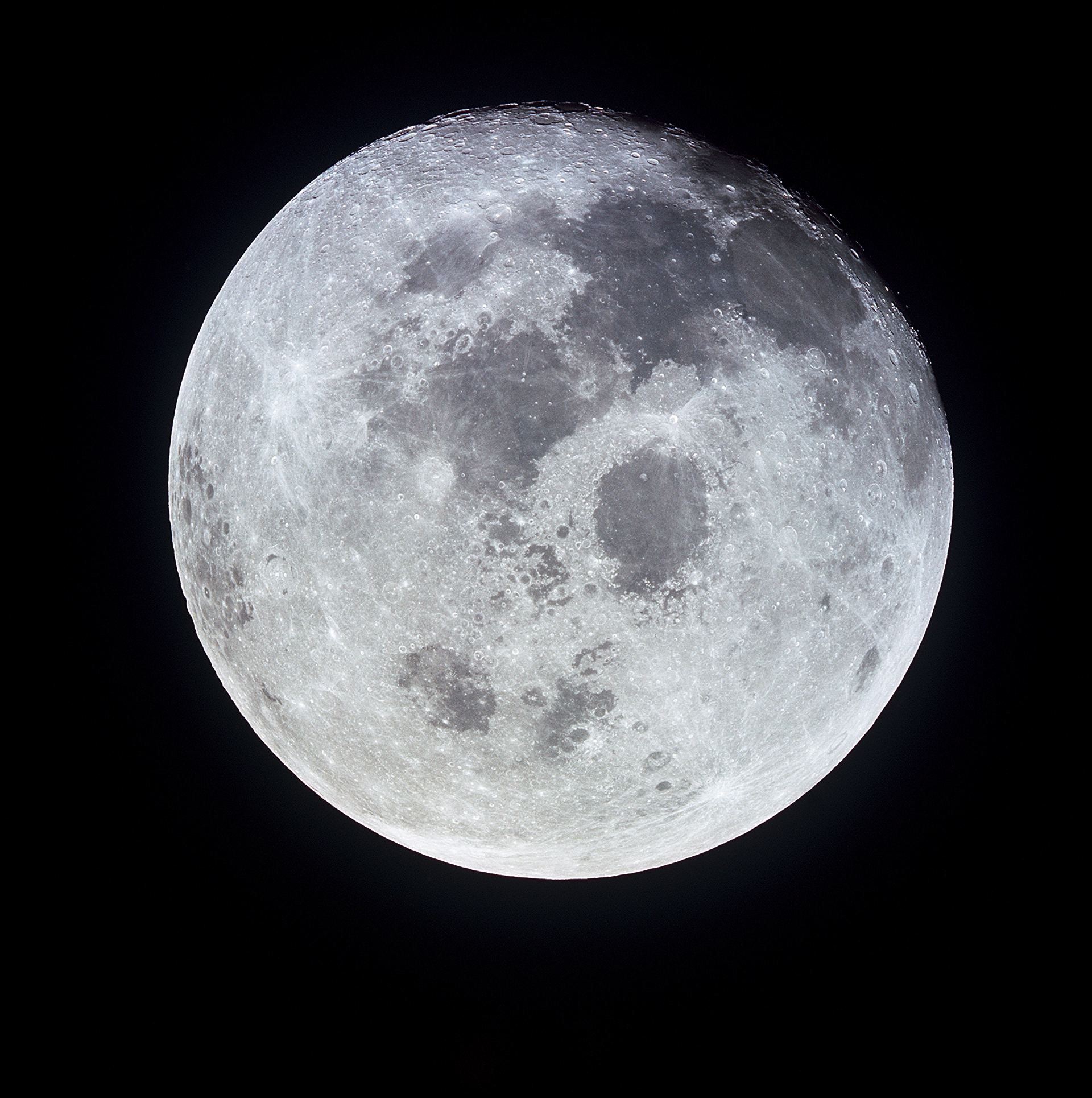
Fuel Made Beyond Earth
We are developing the systems to prospect, mine, and refine lunar water ice— expanding the refueling network beyond propellant launched from Earth.
Mission
The Moon holds the most valuable resource in the solar system: water
Permanently shadowed craters at the lunar south pole contain water ice. Split into hydrogen and oxygen, that resource can supply spacecraft closer to where they operate and reduce dependence on propellant launched from Earth.
Technology
Autonomous mining, processing and delivery of fuel in cislunar space.
Our rovers are designed to operate inside permanently shadowed regions and survive lunar nights. From surface mapping to mining regolith, Astral's fleet covers the full range of lunar surface operations.
Process
From regolith to rocket fuel, in four steps.
Prospect
Autonomous rovers survey permanently shadowed regions, mapping ice concentration and lunar surface topology.
Extract
Rovers mine water rich regolith and separate the water using physical and thermal extraction methodologies.
Refine
Water is separated into hydrogen and oxygen through electrolysis, preparing it for delivery.
Deliver
Reusable tankers stage propellant in lunar depots, refueling missions in Earth's orbit, to the Moon, Mars and further.
Our Fleet
Three systems. One continuous supply chain.
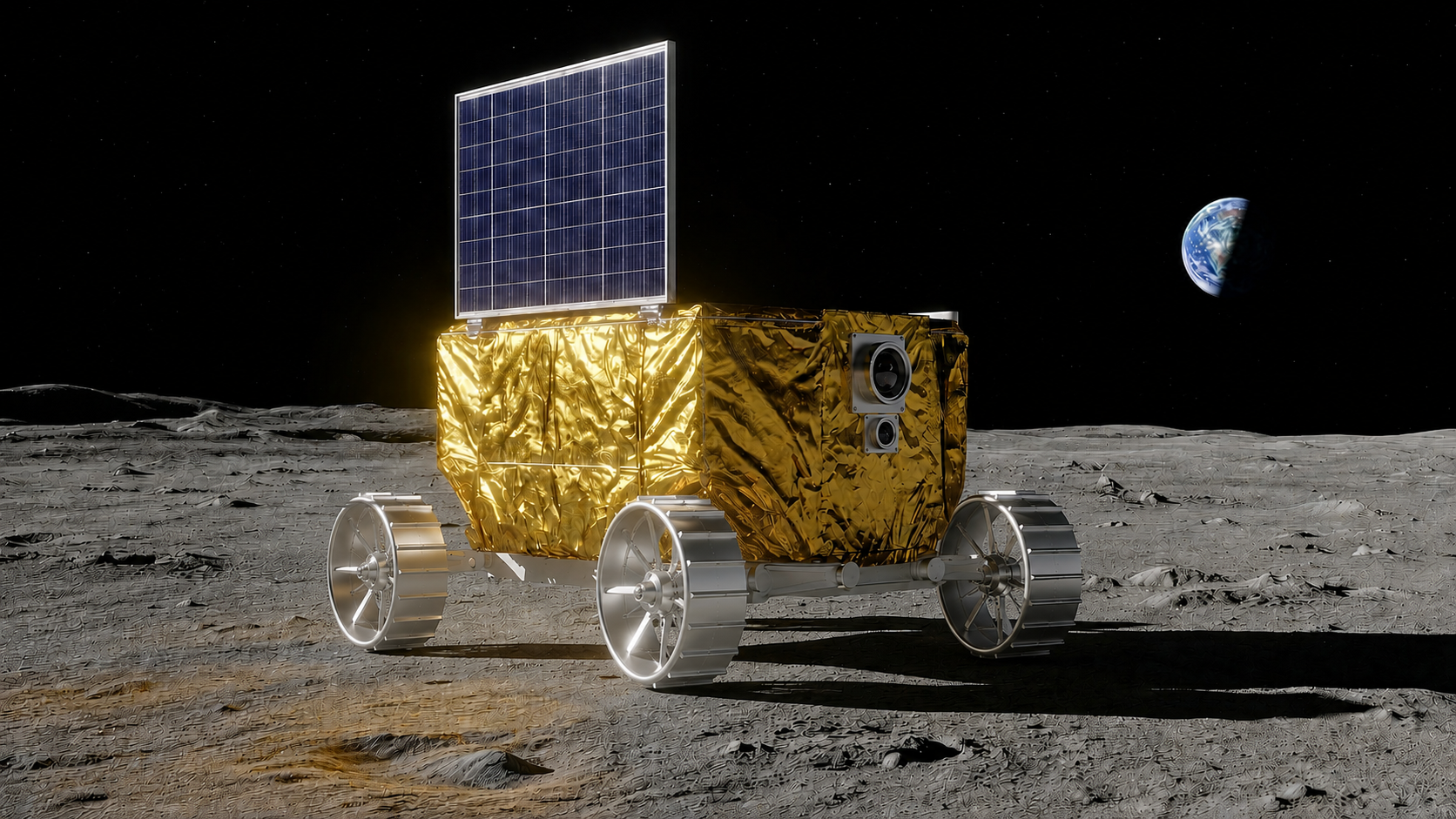
SCOUT
Surface Cartography and Observation Utility Transporter
Phase 1 — Prospect the lunar surface, mapping ice concentration and surface topology across permanently shadowed regions.
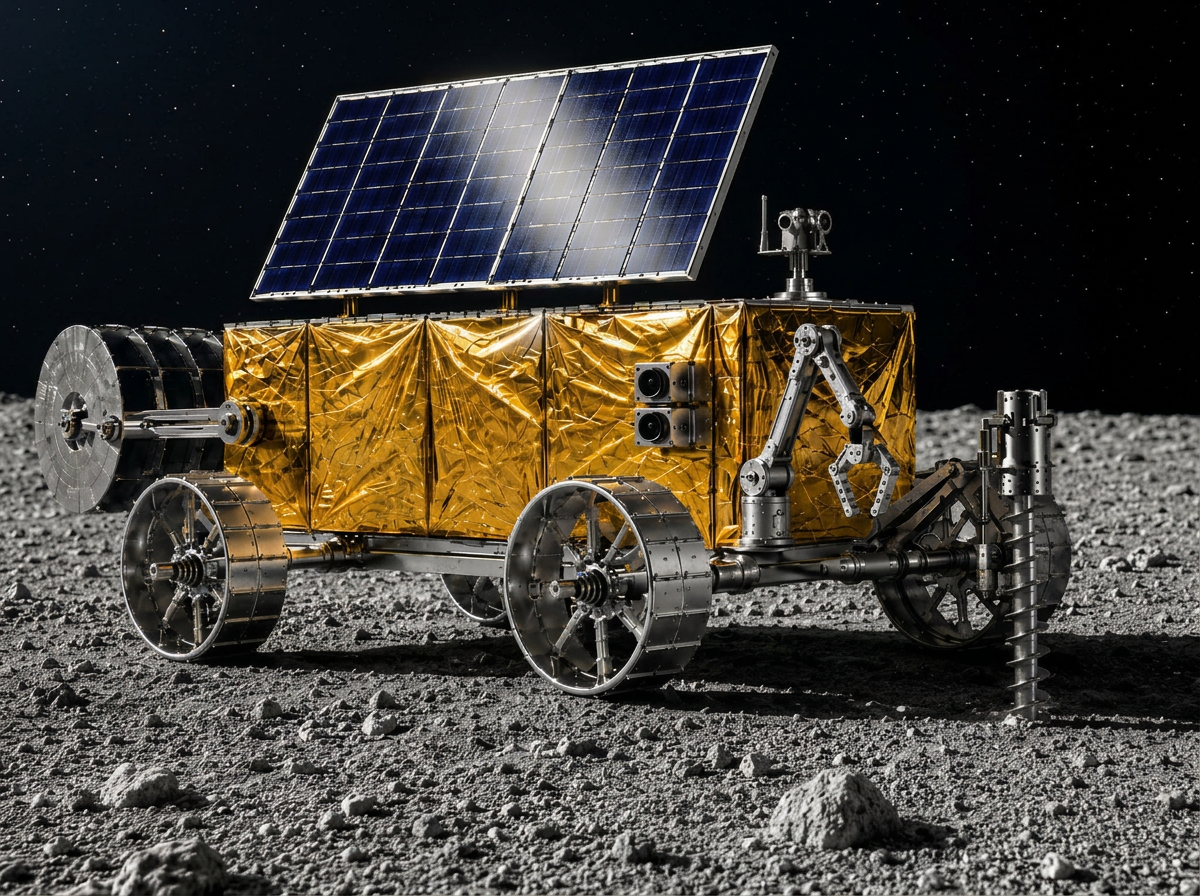
ARDA
Autonomous Resource Decomposition Apparatus
Phase 2 — Extract ice rich lunar regolith, process and refine it into usable propellant.
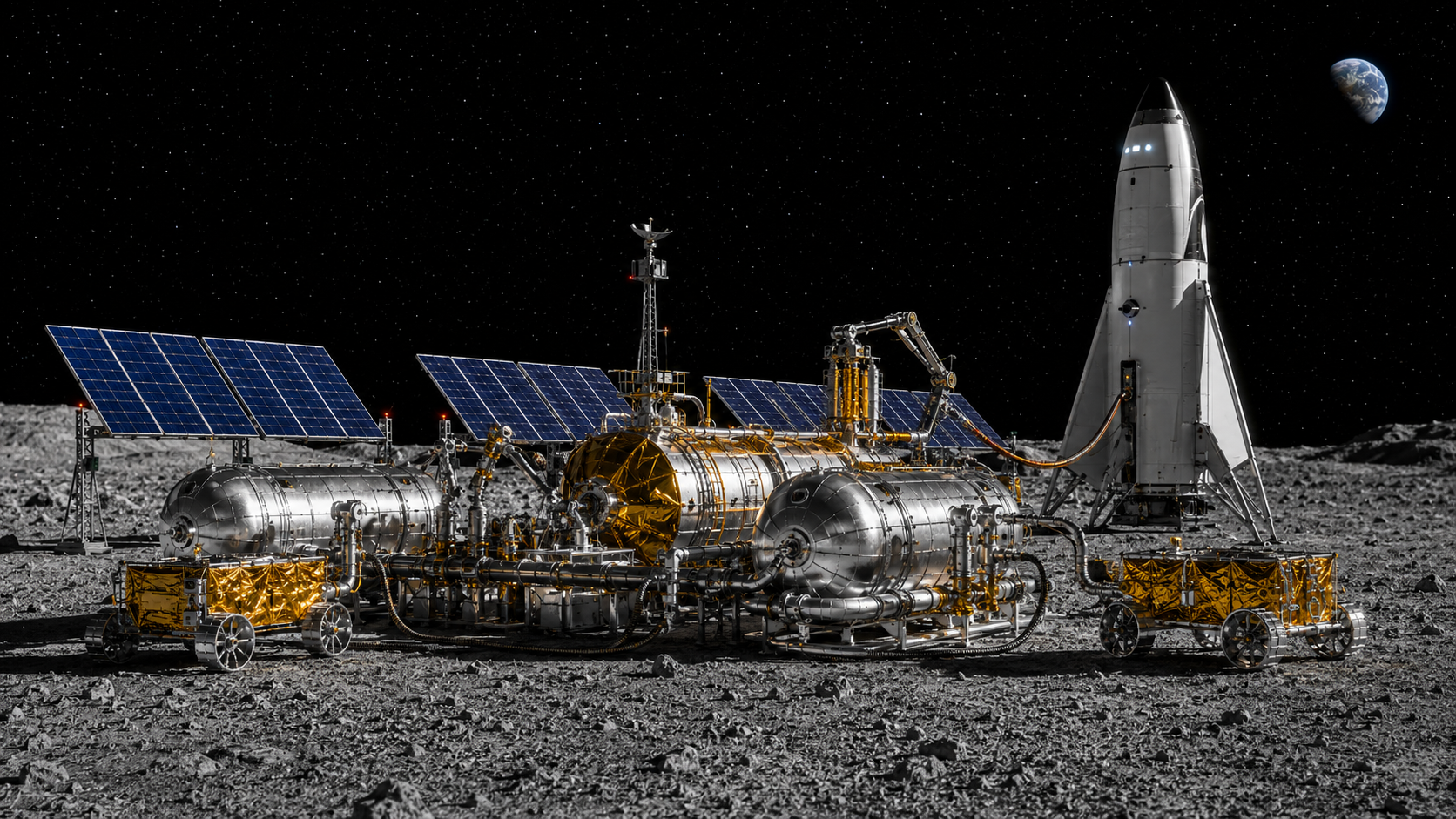
PORT
Propellant Operations and Refueling Terminal
Phase 3 — Deliver fuel and other commodities in space, enabling reusability, mission life extension and a permanent human presence beyond Earth.
More Than Just Fuel
We deliver more than just propellant.
Hydrogen Fuel Cells
Lunar nights can last up to 14 Earth days, requiring an alternative to solar panels and batteries for continued operations. Hydrogen fuel cells charge during the day and dispatch electricity through the night, providing a reliable power source for uninterrupted surface operations.
Crewed Habitat Resources
Humans need around 2.5 kg of water and 1 kg of oxygen per day. Sourcing both locally rather than relying on resupply missions makes a permanent lunar base significantly more sustainable.
Surface Data
High-resolution surface topology and resource maps from our rover fleet, available for mission planning and research.
Payload Space
Reserve payload capacity aboard our rovers for instruments, experiments, and technology demonstrations heading to the lunar surface.
Build the lunar supply chain with us.
We’re accepting payload and data requests for our first mission in 2028. Email us about instruments, surface data, resource prospecting, or payload capacity.
Discuss a Lunar Mission